
Florida is the only state where your insurance company is required by law to give you premium discounts for wind-resistant construction features, and the form that unlocks them, the OIR-B1-1802 wind mitigation report, is mostly about your roof. Homeowners routinely save hundreds to thousands of dollars per year on the wind portion of their premium once the form documents the right features. Here is what most people miss: if your roof predates the modern Florida Building Code, you are probably leaving most of those credits on the table, and a single roof replacement can flip nearly every line of the form in your favor at once.
What the Wind Mitigation Form Actually Credits
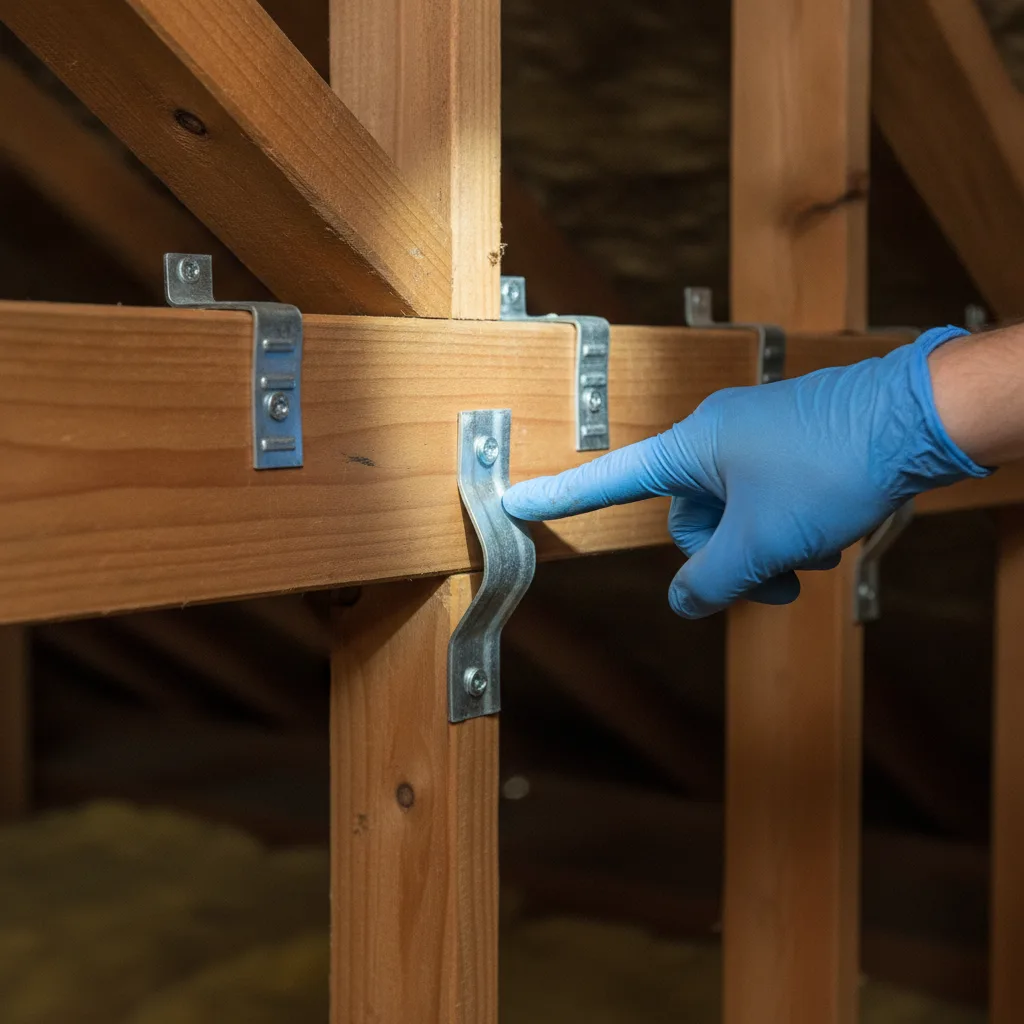
The OIR-B1-1802 documents seven categories: the building code your roof was permitted under, the roof covering and its installation standard, how the roof deck is nailed to the trusses, how the roof structure is connected to the walls (toe nails, clips, or wraps), the roof shape (hip roofs earn the biggest single credit), whether a secondary water resistance layer exists under the covering, and opening protection like shutters or impact glass. Six of the seven run straight through the roof. That is why the inspection takes place half in your attic: the inspector photographs the deck nailing, the truss connections, and the underlayment to prove what is actually there.
How a Current-Code Roof Replacement Changes the Form
What each roof-related line typically looks like before and after a replacement built to current Florida Building Code:
| Form Category | What a New Code-Compliant Roof Does |
|---|---|
| Roof covering | Documents an FBC-rated covering with a current permit date, the baseline for credits |
| Roof deck attachment | Re-nailing to the current schedule (8d ring-shank, tight spacing) earns the stronger deck credit |
| Roof-to-wall connection | Existing straps and clips get documented and photographed while the deck is open |
| Secondary water resistance | A sealed roof deck or peel-and-stick underlayment adds the SWR credit most older roofs lack |
| Building code line | The roof now shows an FBC-era permit, which several carriers key their largest credits to |
The Right Sequence: Replace, Document, Then Inspect
The savings only show up if the paperwork happens in the right order. First, the roof gets replaced to current code, and the features that matter, deck re-nailing, sealed deck or peel-and-stick underlayment, and the truss connections, get photographed while they are visible, because after the covering goes on nobody can see them without opening the roof back up. Second, you receive the permit close-out and our photo documentation. Third, a licensed wind mitigation inspector completes the OIR-B1-1802 using that evidence, and you file it with your carrier. Discounts apply from the next policy period and the form is good for five years. If you replaced your roof recently and never filed a new wind mit, you may be paying for discounts you already earned.
Wind Mitigation and Your Roof
- Do you perform wind mitigation inspections?
- No. Florida law limits who can sign the OIR-B1-1802, and a roofing license is not on that list. We build the roof features the form credits, document them with photos and permit records during the replacement, and refer you to licensed wind mitigation inspectors in Palm Beach County who complete the form. The inspection itself typically costs well under the first year of savings it unlocks.
- How much can a wind mitigation report actually save?
- It varies by carrier, home value, location, and which features the form documents, so we will not quote you a number. Florida's Office of Insurance Regulation requires credits against the wind portion of the premium, which in coastal Palm Beach County is often the largest piece of the bill. Homeowners commonly report annual savings in the hundreds to low thousands after documenting a current-code roof. Ask your agent to run the form both ways and the math speaks for itself.
- My roof is only a few years old. Should I get a wind mitigation inspection?
- If the roof was permitted under the current Florida Building Code and you have never filed an OIR-B1-1802, very likely yes. The features are already there. They are just undocumented, and carriers do not apply credits they cannot see. Pull your permit records, have a licensed inspector complete the form, and file it with your carrier.
- Does a hip roof really earn a bigger discount?
- On most carriers' filings, roof shape is the single largest line item on the form. A hip roof, one that slopes on all sides with no large gable ends, performs better in hurricane wind and is credited accordingly. Roof shape is set by your home's structure, not by the covering, so a replacement does not change it. But every other roof line on the form is in play when you replace.
- Can you help if my carrier dropped me over my roof's age?
- Yes, this is one of the most common calls we get in Florida. A non-renewal tied to roof age or condition usually means the carrier wants proof of remaining life or a replacement. We inspect free of charge, tell you honestly whether a repair with documentation will satisfy them or whether the age math requires replacement, and provide the written scope and permit records your agent needs either way. Call (561) 917-5288.
Storm hit your home? We'll document it.